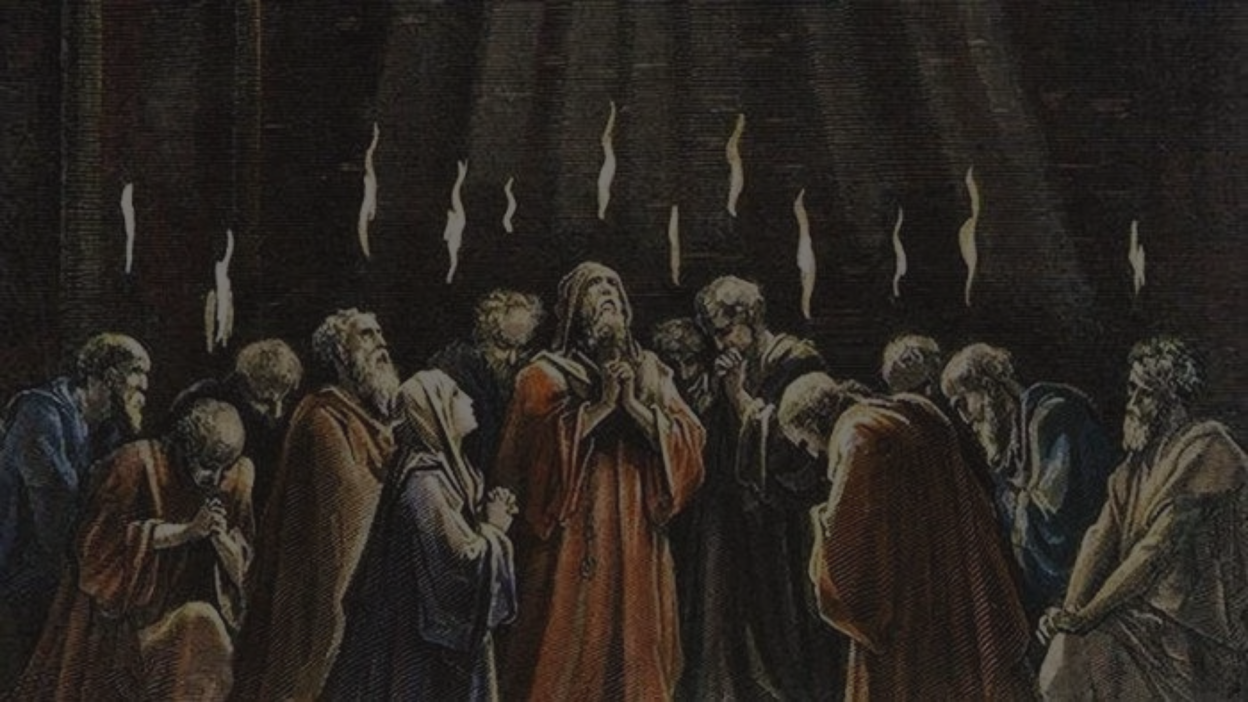
Speaking in Tongues: The Evidence You Deserve to See

It started with a question I couldn’t dodge.

I was at a youth conference in Portland, Oregon. One of those events where the worship is so loud you can feel it in your chest and kids are actually awake and asking real questions about God. After the session, a young man walked up to me. Maybe seventeen. Hands in his pockets, fidgeting a little, but his eyes were locked in.

“Can you prove to me that speaking in tongues is real? Like, historically? Because my friends say it’s just a Pentecostal thing that started a hundred years ago.”

I gave him the best answer I could. Scripture. A few historical references. Paul’s own words in 1 Corinthians 14:18: “I thank God that I speak in tongues more than all of you.”

But I walked away feeling like I owed him more.

That wasn’t the first time. Over the past few years, I’ve gotten messages from college students wrestling with this. Young adults who grew up speaking in tongues but started doubting when their friends at university challenged them. Even pastors, quietly, privately, asking for something they could hand to a questioning church member. Something with sources. Something you could check.

The questions weren’t hostile. They were honest. And honest questions deserve real answers. Not clichés. Not “just believe.” Not emotional pressure. Documented answers. The kind you can hand to a skeptic and say, “Check it for yourself.”

So I did what I do. I started digging. The result is a research guide I’m calling Speaking in Tongues: The Evidence You Deserve to See. It covers the historical, biblical, theological, and scientific evidence from the apostolic era to today. Every claim is sourced. Every contested point is flagged. It’s now in its Third Edition, and I’m making it available as a free PDF at the bottom of this page.

This blog post is the summary. The full document is where the depth lives.

Before We Go Any Further — This Could Be for You

Maybe you landed here because someone shared this link and you’re skeptical. Good. Skepticism isn’t the enemy of faith. Gullibility is. I’d rather you check every source I cite and come to your own conclusion than take my word for it.

Maybe you landed here because you grew up in a church that practices tongues but you’ve never been able to explain it to your roommate or your professor or your boyfriend’s family. You believe it. You’ve experienced it. But when someone pushes back, you don’t have the evidence handy. That’s what the research guide is for. It’s the document I wish I could have handed to that kid in Portland.

Maybe you landed here because you’ve been hurt. Someone told you your prayer language was demonic. Someone said if you really had the Spirit you’d have spoken in tongues by now. Someone made you feel defective.

I’m sorry that happened. It shouldn’t have. The God who gives this gift — the Father Jesus described in Luke 11, the one who would never hand His child a snake when the child asked for bread — did not authorize what was done to you. Your wound is real.

But if you’ll let me say one more thing: the fact that someone misused a gift doesn’t mean the gift is bad. The fact that a kitchen knife can wound doesn’t mean we stop eating. The fact that fire can burn doesn’t mean we live in the cold.

Wherever you’re coming from, keep reading. The evidence can hold the weight of your questions.

What I Thought vs. What I Found

I expected to mostly find Pentecostal authors agreeing with me. Instead, the most compelling arguments came from people I didn’t expect. Scholars from outside my tradition who had no professional reason to agree with me but followed the evidence anyway.

D.A. Carson, a Reformed evangelical at Trinity Evangelical Divinity School, writes that “Scripture offers no shelter to those who wish to rule out all claims to charismatic gifts today” (Showing the Spirit, p. 69). That’s not a Pentecostal talking. That’s one of the most respected evangelical scholars of the last fifty years.

Gordon Fee spent years producing a massive 967-page study of Paul’s teaching on the Holy Spirit. His conclusion? The cessationist argument “is raised not on the basis of reading the biblical text, but from the greater concern as to their ‘legitimacy’ today. But this is a hermeneutical question, pure and simple” (God’s Empowering Presence, p. 893). Fee says Paul’s answer is plain: the gifts continue “as long as we await the final consummation.” Not ambiguous. Not a gray area.

When scholars from outside your tradition reach the same conclusions you do, from their own independent exegesis — that’s not a talking point. That’s the weight of evidence.

I also found internet myths being repeated in our own circles. The so-called “Carl Peterson brain study” claiming that tongues releases beneficial brain chemicals? That study doesn’t exist. No peer-reviewed publication, no university confirmation, no trace of it in any academic database. I flagged it in the research because credibility matters more than comfort. If we’re going to ask people to trust us about the Spirit, we can’t be careless with facts.

We don’t need fabricated evidence. The real evidence is strong enough.

I should be upfront about something else. I’m not a scholar. I’m an apologist and a researcher. My contribution is in gathering, cross-referencing, and organizing the published work of scholars who’ve spent their careers on this. The arguments belong to them. The organizing belongs to me.

Six Things I Found

I’ll keep this short. The whole document goes into much more detail. But this is what stood out:

1. Paul’s final word on this is a command.

Some individuals think Paul was against tongues after reading 1 Corinthians 14. He wasn’t. He was against chaos. This is what Paul really said:

“I thank God that I speak in tongues more than all of you” (1 Corinthians 14:18). “I want each of you to speak in tongues” (1 Corinthians 14:5). And his last order was, “Don’t stop people from speaking in tongues” (1 Corinthians 14:39).

Not a proposal. Not a deal. An order from the apostle. Robert Menzies has said that this is the only explicit order Paul offers on this topic in that whole chapter.

That’s in every Bible on every shelf. You can look at it now.

2. Non-Pentecostal scholars agree.

This one really caught me off guard. It’s not a denominational talking point when D.A. Carson, Gordon Fee, James Dunn, Anthony Thiselton, Wayne Grudem, and David Garland all get to the same conclusion from their own exegesis that the gifts continue. That’s what most New Testament experts think.

1 Corinthians 13:8-10 (“when the perfect comes”) is the most common text cited to say that tongues have stopped. It talks of Christ’s coming, not the end of the Bible. This is not solely the Pentecostal interpretation. Even Richard Gaffin, one of the most serious cessationist scholars living, agrees that “the view that they describe the point at which the New Testament canon is completed cannot be made credible exegetically” (Perspectives on Pentecost, pp. 109-110). If the cessationist scholars won’t utilize the argument, it’s worth considering if it should still have the weight it does.

D. Martyn Lloyd-Jones, probably the most recognized Reformed pastor of the twentieth century, said clearly that cessationism was wrong. Christopher Catherwood, his grandson, said that “he believed that all the gifts existed today” and that he was “both reformed and charismatic, in the biblical senses of the terms” (Introduction to Joy Unspeakable).

That person is not a Pentecostal preacher. The pastor of Westminster Chapel is that person.

3. The history goes deeper than you’ve been told.

When I was a kid, I heard that speaking in tongues stopped after the apostles and didn’t come back until the 1900s. The historical record doesn’t back that up.

Irenaeus, a bishop who was only one generation away from the Apostle John through his teacher Polycarp, claimed in 180 AD that people in his churches “through the Spirit speak all kinds of languages” (Against Heresies 5.6.1). Tertullian in North Africa wrote about tongues and interpretation as active gifts in his church. Novatian in Rome, the Cappadocian Fathers in Turkey, and Cyril of Jerusalem getting people ready for baptism and a spiritual experience. The evidence is there, century after century.

Were there times when the proof wasn’t as strong? Yes. The medieval evidence is more reliant on religious sources that need to be carefully examined. Saying that is necessary for honest scholarship.

But the theological argument for continuance does not rely on establishing an uninterrupted historical lineage. It is based on Peter’s statement that the promise of the Spirit is “for you and your children and for all who are far off” (Acts 2:39), Paul’s belief that the gifts would last until Christ comes back (1 Corinthians 1:7; 13:8-12), and the fact that there is no biblical scripture that says they should be taken away.

4. Cessationism is newer than you think.

For most of church history, people didn’t agree on the assumption that miraculous gifts stopped with the apostles. It has its roots in John Calvin’s Institutes (1559), was expanded upon by Conyers Middleton in 1749, and was organized into a complete system by B.B. Warfield from Princeton in 1918.

That’s the timeline. Three steps over the course of 350 years. Before Calvin, the church, despite its diversity and disagreements, generally believed that the gifts could and did persist.

Jack Deere, a former professor at Dallas Theological Seminary, says it plainly: “No one can become a cessationist by reading the New Testament. The Bible teaches that gifts like miracles and prophecy will be here until Jesus comes back.”

5. 600 million Christians practice this worldwide.

This isn’t a small group. There are more than 600 million Christians around the world who speak in tongues. This includes both Pentecostals and charismatics (279 million Pentecostals and 305 million charismatics, according to Pew Research, 2011). Catholic, Protestant, Orthodox, and independent. From Los Angeles to São Paulo to Seoul to Lagos.

As Harvard’s Harvey Cox put it, “the fastest-growing form of worship on Earth.”

It’s not “Why do Pentecostals believe in tongues?” It’s “Why did some Christians stop believing in them, and when?”

6. The science is suggestive, but let’s be honest about what it shows.

Dr. Andrew Newberg from the University of Pennsylvania did brain scans of patients who spoke in tongues in 2006. His main discovery was that the prefrontal brain, which governs speech that is purposeful and voluntary, was less active during tongues. The speakers weren’t making the speech themselves. Researchers had never measured what their brains were doing before.

But I have to be honest with you about the limits. This was a first study. He called it that himself. Five subjects. No independent control group. Never done on a large scale. It gives hints. It is fascinating. It’s in line with what professionals have long said. But it’s not proof.

A brain scan isn’t the only thing that proves tongues exist. It is based on the Bible, history, and theology. And I’d rather be honest about what it can’t do than make it sound better than it is and lose your trust.

Scholars Who Changed Their Minds

I was surprised to learn that many of the strongest supporters of continuation are not longtime Pentecostals. They are scholars who were once cessationists but altered their beliefs after looking at the facts.

Jack Deere taught Old Testament at Dallas Theological Seminary, which is the main school for cessationist theology. He was asked to produce one Bible verse that clearly teaches cessationism. He couldn’t find one. He quit going to Dallas Seminary. “When I was a cessationist, I never saw God heal anyone because I never prayed for healing. How can you pray regularly for something that you feel God no longer does?” Deere understood that the cessationist worldview was self-confirming. And self-limiting.

Sam Storms grew up in a cessationist setting and was a visiting associate professor of theology at Wheaton College. He came to the conclusion that there was no exegetical case for cessationism after reading the Bible without any preconceived ideas about it. He is a Reformed person. A follower of Calvinism. This proves that this is not a “anti-intellectual” point of view. J.I. Packer, looking at the Puritan literature on personal revelation, said that the Puritans “weren’t cessationists in the Richard Gaffin sense.”

Augustine of Hippo, the most important theologian in the history of the Western church, first believed in cessationism. During this time, he saw and wrote down almost seventy miracles in his own diocese. He partially retracted his cessationism in his Retractions. A partial retreat from Augustine is still important. If the most important theologian in church history could change his mind based on new information, maybe we can all do the same.

When the most serious researchers in the room, people who went to schools that teach cessationism and have every motive to stay there, follow the evidence and come to the conclusion that it indicates to continuation, it’s something to pay attention to.

A Word to Those Who Disagree

If you hold a cessationist position, I respect you. You almost certainly hold it because sincere, godly teachers you trust taught it to you from a genuine love of Scripture. Our disagreement is not about whether the Bible is authoritative. It is. Our disagreement is about what the Bible actually teaches on this specific question.

I need you to know something about me. Before I spent years researching the case for speaking in tongues, I spent years investigating abuses in my own tradition. The NAR. The manipulation. The financial exploitation. The authoritarianism dressed up in spiritual language. I put the same investigative energy into exposing what was wrong in charismatic circles as I now put into defending what is right about the gifts of the Spirit.

So when cessationists raise concerns about abuse and disorder, I don’t dismiss them. I’ve seen it. I’ve documented it. I’ve spoken against it publicly. That’s also why the research guide flags every contested claim, corrects overstatements from our own circles, and honestly acknowledges where the evidence is thin. Credibility isn’t built by hiding problems. It’s built by confronting them.

Scripture is the final authority. All experience must be tested by it. The answer to abuse is not to deny the gifts. The answer is to practice them the way Paul taught us to: with order, with love, and with accountability.

The strongest cessationist arguments — like Thomas Schreiner’s case from Ephesians 2:20 — deserve serious engagement, not dismissal. The full research guide addresses them directly. It also engages a newer challenge from Philip Blosser and Charles Sullivan, two scholars who argue that modern glossolalia has no precedent before the nineteenth century. Their work has received formal reviews in top journals and a direct rebuttal by John Gresham in the Journal of Pentecostal Theology (2025), which won a 2026 Award of Excellence. Paul’s own words in 1 Corinthians 14:2 — where “no one understands” the speaker who “utters mysteries in the Spirit” — speak directly to this question. The full case is in the research guide.

Why I’m Sharing This Now

I didn’t write this to prove I was right. I wrote it because people — real people, young people, people I care about — are asking an honest question and they deserve an honest answer.

For a long time, this was just my personal project. My own investigative work. But the questions kept coming, and I realized that keeping this research to myself wasn’t helping the people who needed it most. So this blog is the first time I’m making any of it public.

The research guide is now in its Third Edition — not because I’ve published two editions before, but because it’s been through that many rounds of corrections, fact-checking, and new scholarship. I kept refining it because I wanted it to be right before I put it in anyone’s hands.

This blog is also the first in a series. The full research guide is thorough, but I know most people aren’t going to sit down and read a 27,000-word document on a Tuesday night. So over the coming weeks, I’ll be writing additional posts that take specific sections and break them down into shorter, easier pieces. The history in one post. The biblical evidence in another. The science. The scholars who changed their minds. One topic at a time, in plain language, for everyday people who just want honest answers.

If this post helped you, or if it raised questions you want me to go deeper on, let me know. This series is for you. Your questions shape what I write next.

The promise Peter made on the day of Pentecost is still good. “For you and your children and for all who are far off, for all whom the Lord our God will call” (Acts 2:39).

If He has called you, it is for you.

I hold this work with open hands. The evidence is strong, but I’m still learning. I plan to keep updating the document as new scholarship emerges. But I believe what’s here is solid, honestly presented, and verifiable. And if you find an error, tell me. Accuracy matters more than being right.

My prayer is simple: that this serves as a blessing to the body of Christ. Not as a weapon, but as a light. For anyone willing to look at the evidence and follow it wherever it leads.

Stay hungry for the meaning of life.

— Paul Natekin

Coming Next in This Series

This was the overview. In the posts ahead, we go deeper into the evidence one piece at a time:

  1. Did Tongues Really Stop After the Apostles? A walk through 2,000 years of historical evidence, honestly presented.
  2. What Does the Bible Actually Say About Speaking in Tongues? Paul’s own words, in context, without the spin.
  3. The Passage Everyone Argues About: “When the Perfect Comes.” The one verse cessationists lean on hardest, and why most scholars say it doesn’t mean what you’ve been told.
  4. What Do Non-Pentecostal Scholars Say? The surprising conclusions from Reformed, Baptist, Anglican, and Catholic scholars.
  5. Who Decided the Gifts Stopped? The history of cessationism from Calvin to Warfield to today.
  6. Scholars Who Changed Their Minds. Their stories, their reasons, in their own words.
  7. What If You’ve Been Hurt by This Topic? For anyone who’s been shamed, pressured, or confused.

Each post is short, clear, and sourced. No pressure. Just evidence and an open door.


About the Research

The complete research guide is currently in its third edition. Each edition made citations more precise, fixed mistakes (even those from our own tradition), and added fresh research. Quotes were checked against original texts. If something couldn’t be confirmed, it was either taken out or marked. I said so when the evidence was weak. When cessationist arguments were strong, I made them as strong as I could before responding.

The guide has more than 75 scholarly sources and an appendix that checks every assertion that is in dispute. It includes the historical, biblical, theological, and scientific evidence.

It’s free.

Download the Full Research Guide (PDF)

If you find an error, tell me. This research is ongoing, and your feedback makes it better.

For questions or corrections: contact
Was this helpful?

Previous Article

God's Invitation in Your Questions: Seeking the Creator

Next Article

Did Tongues Really Stop After the Apostles?