Speaking in Tongues: The Evidence, Part 5 of 7
If you grew up hearing that tongues stopped after the apostles, you probably assumed that’s what the church has always believed.
It hasn’t.
For roughly 1,500 years, the church assumed the gifts of the Spirit continued tongues, prophecy, and healing. Communities kept expecting them. Kept reporting them. The idea that God formally withdrew those gifts has an origin story, and it’s more recent than most people realize.
One thing up front. This isn’t an attack on cessationists. Some of the most brilliant theologians in church history have held that position: Calvin, Warfield, Gaffin, and Schreiner. Their commitment to Scripture isn’t in question. The disagreement isn’t about who loves the Bible more. It’s about what the Bible actually teaches on this one question.
You deserve to know where the idea came from.
Calvin Started It (1559)
John Calvin was a genius. His Institutes of the Christian Religion shaped Protestant theology in ways we’re still feeling today. And in Book 4, Chapter 19, he became arguably the first theologian to build a sustained, formal case that miraculous gifts had ceased.
But Calvin was more careful than people on either side usually admit.
From Institutes 4.19.19:
“The Lord, doubtless, is present with his people in all ages, and cures their sicknesses as often as there is need, not less than formerly; and yet he does not exert those manifest powers, nor dispense miracles by the hands of apostles, because that gift was temporary.”
Notice what Calvin affirmed. God is “present with his people in all ages” and “cures their sicknesses as often as there is need.” What he denied was that God does this through miraculous gifts operating through human agents. He drew a line between God’s providential healing and the apostolic gift of healing.
You can disagree with that distinction. I do. But Calvin wasn’t dismissing the supernatural. He was making a theological argument about the mode of God’s work after the apostolic era. His target was Catholic miracle claims tied to sacramental theology, not anything resembling modern charismatic worship.
And he left a crack in the door. In Institutes 4.3.4, he wrote: “I do not deny that the Lord has sometimes at a later period raised up apostles, or at least evangelists in their place, as has happened in our own day.” He immediately qualified it. He meant the Reformers’ unique role, not a general revival of the gifts. But the statement shows Calvin recognized God could act outside the framework he had constructed.
So, yes, Calvin was the first major theologian to articulate a clear cessationist doctrine. His version was more careful than the hard cessationism that came after him.
Middleton Supplied the Method (1749)
Almost two centuries later, an Anglican cleric named Conyers Middleton published A Free Inquiry into the Miraculous Powers Which Are Supposed to Have Subsisted in the Christian Church from the Earliest Ages.
(Academics and short titles. Never a strong combination.)
Middleton did something Calvin hadn’t. He went through the historical record, the church fathers, the medieval accounts, and the hagiographic literature and argued systematically that miracle claims after the apostolic era were unreliable. Calvin made the theological case. Middleton built the historical one.
His work preceded Warfield’s famous treatment by over 150 years and directly influenced everything that came after. Warfield cited Middleton over 23 times.
Warfield Built the System (1918)
Benjamin Breckinridge Warfield was a Princeton heavyweight. His 1918 book Counterfeit Miracles became the single most influential cessationist work in modern history. The argument was clean. Miraculous gifts were given to authenticate the apostles and their message. Once the apostolic age ended and the canon was complete, the gifts ceased by divine design.
That framework became the intellectual backbone for 20th-century cessationism. Most Reformed and dispensationalist theologians used it to oppose the emerging Pentecostal movement.
Most people don’t know the weak spot in Warfield’s argument.
Wayne Grudem, a complementarian Reformed theologian and not a Pentecostal, names it. Warfield’s argument “is really a historical survey, not an analysis of biblical texts.” And Warfield was opposing Roman Catholic miracle claims, not mainstream evangelical charismatic practice. Grudem adds: “It is open to question whether modern-day cessationists are right to claim Warfield’s support when opposing something far different in doctrine and life from what Warfield himself opposed.”
Think about that. The most influential cessationist book of the last century made its case primarily from history rather than sustained exegesis.
The Lineage Nobody Talks About
Jack Deere, a former Dallas Theological Seminary professor who changed his mind on this issue (more on him in the next post), traces the development in three stages. Calvin articulated the framework. Middleton supplied the historical method. Warfield fused both into the system that shaped virtually all cessationist argumentation since.
Then Deere drops the line that cessationists have struggled to answer:
“No one ever becomes a cessationist by reading the New Testament. The Bible teaches that gifts like miracles and prophecy will be here until Jesus comes back.”
Strong claim. Try it yourself. Open 1 Corinthians. Read chapters 12 through 14. Find the verse that says, “These gifts will stop when the last apostle dies.” Find the verse that says, “Once the Bible is completed, you won’t need tongues anymore.”
It isn’t there.
Paul says the gifts cease when “the perfect” comes, and even most cessationist scholars now agree “the perfect” is Christ’s return, not the closing of the canon.
Craig Keener makes the historical point sharper. Cessationism “arose only in a culture dominated by anti-supernaturalism.” It’s almost entirely a Western phenomenon. Christians in Africa, Asia, and Latin America communities not shaped by the European Enlightenment overwhelmingly embrace continuation. Over 600 million of them.
The Strongest Current Case: Schreiner and Ephesians 2:20
The best cessationist argument being made today isn’t Warfield’s. It’s Thomas Schreiner’s.
In Spiritual Gifts (2018), Schreiner does something remarkable for a cessationist. He concedes that “the perfect” in 1 Corinthians 13:10 refers to Christ’s return. He removes the passage most cessationists have historically relied on.
Instead, he builds his case on Ephesians 2:20. The church is built on the “foundation” of apostles and prophets. A foundation, by nature, is laid once. It’s closed. If the prophetic gift was foundational, it belonged to the founding era.
Schreiner also rejects Grudem’s concept of “fallible prophecy.” He argues that NT prophecy was infallible, identical in authority to OT prophecy. That creates a dilemma for continuationists. If prophecy continues and is infallible, you’ve got ongoing inerrant revelation competing with Scripture. If prophecy continues but is fallible, then in Schreiner’s view, you’ve redefined the gift beyond recognition.
It’s a serious argument. It deserves a serious response.
Here are the five problems with it:
- “Foundation” refers to doctrine, not a time-limited gift class. Paul elsewhere treats gifts as ongoing until Christ’s return (1 Corinthians 1:7; Ephesians 4:11–13). The foundation is the apostles’ teaching about Christ, not a calendar restriction on spiritual gifts.
- The “prophets” in Ephesians 2:20 may be OT prophets. The phrase is “apostles and prophets,” not “apostles and New Testament prophets.” Several scholars argue that Paul means the OT prophets who pointed to Christ alongside the apostles who proclaimed Him.
- Even if NT prophets are meant, the text says nothing about tongues or healing. Extending the “foundation” argument beyond prophecy requires reasoning that goes beyond what the passage actually states.
- Grudem’s response stands. Ordinary congregational prophecy, the kind Paul regulates in 1 Corinthians 14, is distinct from the “foundational” prophetic authority of Ephesians 2:20. The church can have ongoing fallible prophecy without adding to the canon. And if first-century prophetic revelation was truly infallible, why was virtually none of it canonized? Thousands of prophets spoke in NT churches, but their words weren’t treated as Scripture.
- D.A. Carson, a Reformed scholar and not a Pentecostal, concludes that apostleship in the narrow sense is the only gift he considers obsolete. Not tongues. Not prophecy. Not healing.
Schreiner is a brilliant scholar. His work deserves engagement. But the Ephesians 2:20 argument, even at its strongest, requires conclusions the text itself doesn’t demand.
The 2023 Resurgence
Cessationism isn’t fading. In the last few years, it’s had a real resurgence.
Tom Pennington published A Biblical Case for Cessationism (2023), endorsed by Richard Gaffin with a foreword by John MacArthur. The most significant new cessationist monograph of the decade.
The Cessationist documentary (2023) brought the case to a popular audience through G3 Ministries.
Costi Hinn, Benny Hinn’s nephew, published Knowing the Spirit (2023) from a cessationist perspective, drawing on his unique family history.
Sam Storms responded with a 15-part blog series that engaged with the documentary point by point. Craig Keener also noted that the arguments in these newer works dismiss the experiences of hundreds of millions of believers without engaging the published scholarly evidence. The core arguments are mostly the same ones Storms had already cataloged, but they’re reaching a new generation with fresh energy.
The conversation isn’t over.
A Word on Blosser and Sullivan
A different kind of challenge came from Philip Blosser and Charles Sullivan in Speaking in Tongues: A Critical Historical Examination (2022–2023). They’re not cessationists. They’re sympathetic insiders who argue that modern glossolalia, the unintelligible “prayer language” in Pentecostal and charismatic churches, has no precedent before the nineteenth century. Their claim is that for 1,800 years, everyone understood tongues as xenolalia, real foreign languages. Modern glossolalia, they say, was a later redefinition.
It’s a serious historical argument.
But John Gresham published a direct rebuttal in the Journal of Pentecostal Theology (2025) that won the 2026 Award of Excellence from the Foundation for Pentecostal Scholarship. Gresham argued that the early Pentecostal understanding was a rediscovery, not an invention, and that patristic evidence actually supports glossolalic tongues in the earliest centuries.
Then there’s Paul’s own words. “For one who speaks in a tongue speaks not to men but to God; for no one understands him” (1 Corinthians 14:2). If tongues were real foreign languages, someone in cosmopolitan Corinth would have understood. Paul is describing speech that is unintelligible to all human hearers. That’s glossolalia by definition. Described in the 50s AD. Not invented by German critics in the 1830s.
So What Do We Do With This?
Cessationism has a history. An origin point. Specific theologians at specific times, responding to specific reasons some of them good, responding to real abuses.
But it isn’t what the church has always believed. And it isn’t what the New Testament teaches.
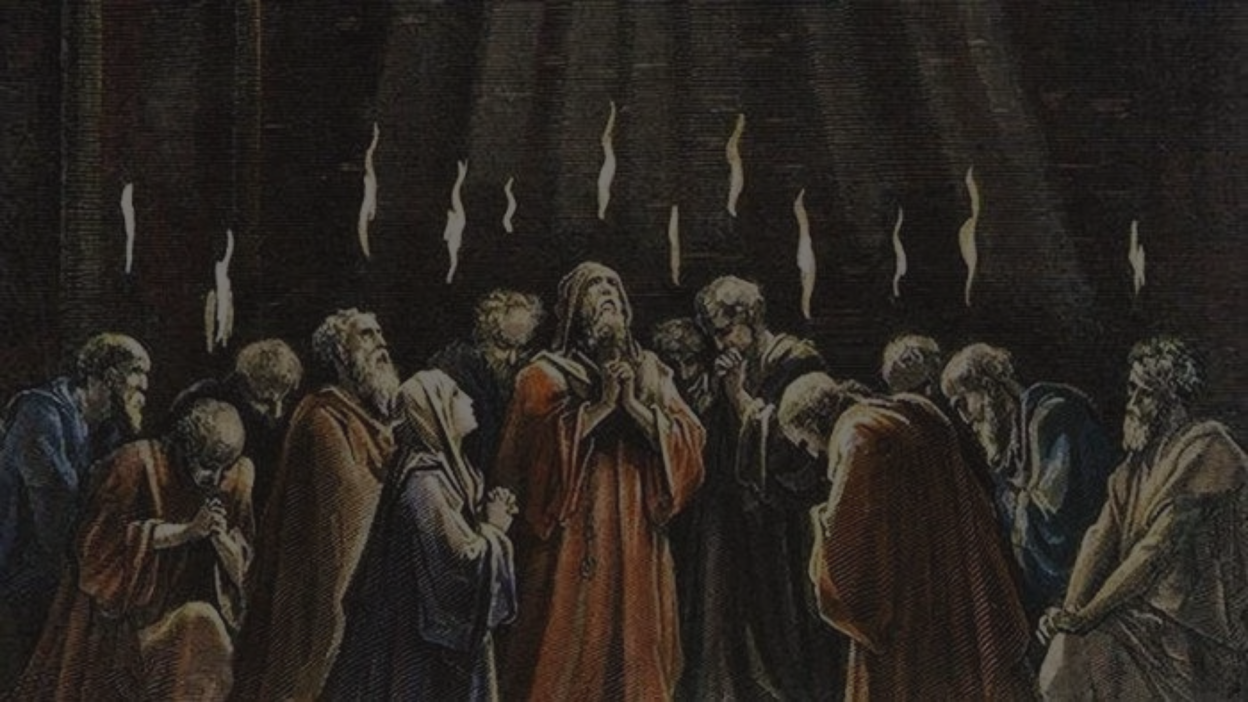
The promise Peter proclaimed at Pentecost had no expiration date: “The promise is for you and your children, and for all who are far off for all whom the Lord our God will call” (Acts 2:39).
That includes you.
The question isn’t whether these gifts stopped. The question is whether you’re willing to look at the evidence and decide for yourself.
Sources
- John Calvin, Institutes of the Christian Religion (1559)
- Conyers Middleton, A Free Inquiry into the Miraculous Powers (1749)
- B.B. Warfield, Counterfeit Miracles (Scribner, 1918)
- Wayne Grudem, The Gift of Prophecy in the New Testament and Today (Crossway, 2000)
- Jack Deere, Why I Am Still Surprised by the Power of the Spirit (Zondervan, 2020)
- Craig Keener, Miracles (Baker Academic, 2011)
- Thomas Schreiner, Spiritual Gifts (B&H Academic, 2018)
- Tom Pennington, A Biblical Case for Cessationism (2023)
- Costi Hinn, Knowing the Spirit (Zondervan, 2023)
- Sam Storms, Practicing the Power (Zondervan, 2017)
- Philip Blosser and Charles Sullivan, Speaking in Tongues: A Critical Historical Examination (2022–2023)
- John Gresham, rebuttal in Journal of Pentecostal Theology (2025)
Full citations with page numbers are in the free research guide.
This post is part of the “Speaking in Tongues: The Evidence” series. For the full overview and the free research guide PDF, visit the overview post.
Next: Scholars Who Changed Their Minds.