Speaking in Tongues: The Evidence, Part 2 of 7
This is the question that comes up more than any other. In dorm rooms. In-text threads. After Bible studies. Sometimes with genuine curiosity. Sometimes with arms crossed.
“Show me where in the Bible it says tongues are for today.”
Fair question. Honest one. The kind that deserves a real answer.
And the answer isn’t hiding in one obscure verse in the back of Revelation. It shows up across the New Testament, in more places than you’d expect. Old Testament too. Gospels. Acts. Paul’s letters. Woven so deeply into the whole thing that I’d argue you have to work harder to explain it away than to accept it.
So if you’ve ever been told that tongues were “just for the apostles” or that the Bible is “unclear” on this, pull up a chair. We’re walking through what the text actually says. Not what someone’s pastor said, it says. Not what that guy on YouTube said. Not what a denomination decided in 1920.
The text itself.
And it says a lot more than most people realize.
A Promise With No Expiration Date
Before we get to the New Testament, we need to start where Peter started: a prophecy already 800 years old by the time he quoted it.
Joel 2:28-29:
“And afterward, I will pour out my Spirit on all people. Your sons and daughters will prophesy, your old men will dream dreams, your young men will see visions. Even on my servants, both men and women, I will pour out my Spirit in those days.”
Read that again. “All people.” Sons. Daughters. Old. Young. Male servants. Female servants.
No asterisks. No fine print. No “valid for first-generation believers only.”
This is where the story of tongues begins. Not in a chaotic church service. Not in a tent revival. In an ancient Hebrew prophecy about what God planned to do for all of his people.
And notice the nature of the gift: prophetic speech. Prophecy, dreams, visions. The Spirit would come and people would speak. That matters.
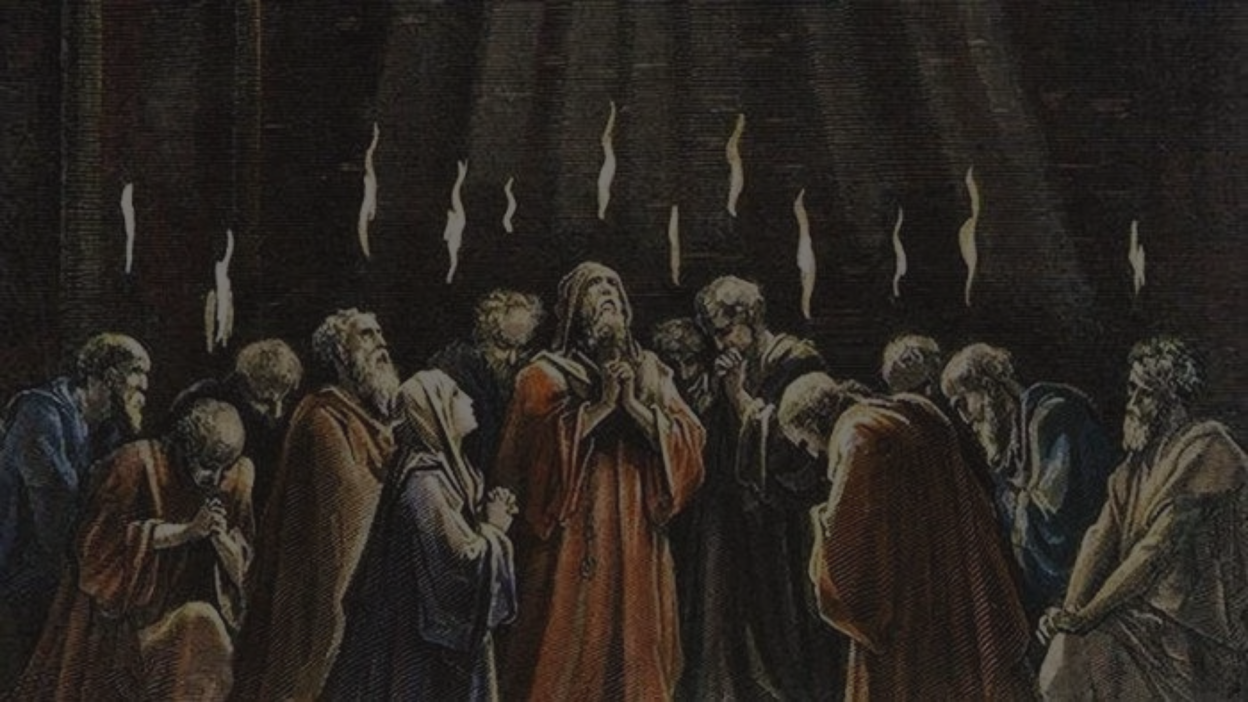
When the Day of Pentecost came and tongues of fire landed on 120 people in an upper room, Peter stood up and told the crowd exactly what was happening. This is that. This is what Joel was talking about (Acts 2:16-21).
But Peter didn’t stop there.
Then he said something that carries enormous weight for this whole debate:
“The promise is for you and your children and for all who are far off — for all whom the Lord our God will call.” (Acts 2:39)
For you. Your children. All who are far off. Everyone God will ever call.
That’s not an expiration date. That’s an open invitation.
And here’s something wild. Moses said the same thing thousands of years earlier. The Spirit fell on seventy elders, and two guys who weren’t even in the right place started prophesying. Joshua got nervous. Told Moses to shut them down. Moses’ response? “Are you jealous for my sake? I wish that all the Lord’s people were prophets and that the Lord would put his Spirit on them!” (Numbers 11:29).
What Moses wished for, Joel prophesied.
And Pentecost delivered.
Jesus Said to Ask
Before Pentecost ever happened, Jesus himself told his disciples to pray for the Spirit. Luke 11:13:
“If you then, though you are evil, know how to give good gifts to your children, how much more will your Father in heaven give the Holy Spirit to those who ask him!”
Robert Menzies, a New Testament scholar who’s spent decades on Luke-Acts, caught something here that changes the picture. This isn’t addressed to unbelievers. Jesus is talking to his disciples, people who already follow him. So this can’t be about conversion. It’s about something more. A gift the Father wants to give to people who are already his.
And the verbs?
Present imperative. Keep asking. Keep seeking. Keep knocking. Not “ask once and wait.” Not “seek until you get tired.” The grammar itself is relentless. Like a kid on Christmas morning who won’t stop asking for the one thing they really want.
Except this time, the Father actually wants to say yes.
Menzies also draws attention to the snake and scorpion imagery in this passage. Luke’s version includes Jesus’ reassurance that the Father won’t give you something harmful when you ask for the Spirit. Why would Jesus need to say that? Maybe because when the Spirit shows up with power, with prophetic speech, with tongues, it can be loud. Unfamiliar. It can make people nervous.
And Jesus says: Don’t be afraid. The Father gives good gifts.
Five Times in Acts. One Pattern.
This is where it gets really hard to argue with the text.
Luke records five distinct moments where people receive the Holy Spirit. Five different groups. Different cities. Different circumstances. And a pattern emerges that you can’t unsee.
1. Pentecost (Acts 2:1-4). 120 disciples in the upper room. “All of them were filled with the Holy Spirit and began to speak in other tongues as the Spirit enabled them.” Tongues? Explicitly mentioned.
2. The Samaritans (Acts 8:14-19). Philip preaches in Samaria, and people believe. Peter and John come and lay hands on them. Something happens, something so visible that a local sorcerer named Simon offers money to get the power to do the same thing. Tongues not explicitly named here. But whatever happened was observable. As Menzies puts it: “Something visible happened that made Simon the sorcerer want to BUY the ability to confer it. That’s not a coincidence, that’s a pattern.”
3. Paul (Acts 9:17-18). Ananias lays hands on Saul, says the Lord sent him “so that you may see again and be filled with the Holy Spirit.” Tongues not mentioned in this passage. But Paul later writes, “I speak in tongues more than all of you” (1 Corinthians 14:18). He got it somewhere.
4. Cornelius’ Household (Acts 10:44-46). The first Gentile converts. The Spirit falls while Peter is still talking. “For they heard them speaking in tongues and praising God.” Tongues? Explicitly mentioned. Peter himself calls it a repeat of Pentecost (Acts 11:15-17).
5. The Ephesians (Acts 19:1-7). About twelve disciples of John the Baptist. Already believers. Paul lays hands on them, “the Holy Spirit came on them, and they began speaking in tongues and prophesying.” Tongues? Explicitly mentioned.
Scorecard: three out of five explicitly mention tongues. The fourth strongly implies observable evidence. And the fifth involves the man who becomes the most prolific tongue-speaker in the New Testament.
That’s not an anomaly. That’s a pattern.
And notice: these five accounts span the entire geographic and ethnic scope of the early church. Jews in Jerusalem. Half-Jews in Samaria. A Pharisee on the road to Damascus. Gentiles in Caesarea. Disciples of John the Baptist in Ephesus. Every barrier the ancient world could construct, the Spirit blew right through.
Every time, the evidence looked the same.
Luke wasn’t writing random history. He was building a case. And the case is remarkably consistent.
What Paul Actually Said (Hint: It’s Not What You Think)
Most of the arguments against tongues come from 1 Corinthians 12-14. And I get it. Parts of it sound restrictive if you pull verses out of context. But when you read the whole thing, in context, the picture that emerges is radically different from what the critics claim.
First, the context.
Corinth was a mess. Paul was writing to a church that had real problems: people using tongues to show off, interrupting services, and creating chaos. The gifts needed regulation. Not elimination.
Gordon Fee, a world-class New Testament scholar at Regent College, makes exactly this point. Paul’s instructions in 1 Corinthians 14 assume the continuation of tongues and prophecy. He regulates them. He doesn’t abolish them.
There’s a massive difference between “do it in order” and “stop doing it.”
So what did Paul actually say about tongues? In his own words:
“I would like every one of you to speak in tongues.” (1 Corinthians 14:5)
Not some of you. Everyone of you. He goes on to say he’d rather they prophesy in corporate worship, because prophecy builds up the whole room without needing an interpreter. But his starting position is clear: he wants everyone to have this gift.
“I thank God that I speak in tongues more than all of you.” (1 Corinthians 14:18)
Stop and think about that.
Paul. The man who wrote Romans, Galatians, and Ephesians. Arguably, the greatest theologian of the early church. And he prayed in tongues more than the entire Corinthian church combined. This wasn’t some fringe practice he tolerated. It was central to his prayer life.
And he’s not embarrassed about it. He’s thankful. “I thank God.”
When Paul describes what happens when he prays in tongues, he says “my spirit prays” (1 Corinthians 14:14). His spirit, connected to God’s Spirit, is praying mysteries his conscious mind can’t articulate. He prayed with his spirit and with his understanding. Sang with his spirit and with his understanding (1 Corinthians 14:15). Both. Not one or the other.
“Do not forbid speaking in tongues.” (1 Corinthians 14:39)
That’s not a suggestion.
That’s a direct apostolic command. As Menzies says: “This is the one clear command Paul gives there.” Three chapters of careful instruction about order and love and building each other up, and Paul’s final word on tongues is: Don’t you dare forbid it.
But What About the Restrictions?
Fair question. And I want to be honest about this.
Yes, Paul puts guardrails on tongues in corporate worship. Two or three speakers at most. One at a time. An interpreter must be present. If there’s no interpreter, keep it between you and God (1 Corinthians 14:26-28).
Those are real instructions. They matter.
But notice what Paul is regulating: the public exercise of tongues as a message to the congregation. A person stands up and delivers a message in tongues, and someone else interprets it for the church. That specific practice has rules.
This is different from personal prayer in tongues, what Paul describes in 1 Corinthians 14:2: “Anyone who speaks in a tongue does not speak to people but to God.” And it’s different from corporate worship, where the whole church is praying and praising together in the Spirit.
Menzies draws this distinction carefully. There’s the congregational gift of tongues (a message given to the church, requiring interpretation) and private prayer tongues (the personal devotional practice Paul himself engaged in “more than all of you”). Same gift. Two settings. Two sets of guidelines.
Paul’s corrective letter to Corinth isn’t an argument against tongues. It’s an argument for doing them well. In love. In order. Paul also wrote corrective letters about the Lord’s Supper (1 Corinthians 11). People were getting drunk at communion. Getting greedy. Humiliating the poor. Did his response mean we should stop taking communion?
Of course not.
He corrected the abuse without eliminating the practice. Same thing with tongues.
And the fact that Paul spent three chapters regulating the gifts is itself strong evidence that they were active, expected, and valued. You don’t write traffic laws for a road nobody drives on.
The Verse That Ties It All Together
Joel’s prophecy. Jesus’ promise. The pattern through Acts. Paul’s personal testimony and his direct command.
The verse that ties it all together is the one Peter spoke on the very first day:
“The promise is for you and your children and for all who are far off — for all whom the Lord our God will call.” (Acts 2:39)
For you. Right now. In 2026. Wherever you’re reading this.
The prophecy didn’t expire. The promise didn’t shrink. And the apostle who wrote more New Testament letters than anyone else prayed in tongues more than a church full of people and told them not to forbid it.
So when someone asks, “Show me where in the Bible it says tongues are for today,” the honest answer is: show me where it says they stopped.
Because no text in the Bible explicitly says they did.
If you’ve been told that tongues aren’t for you, that they were just for the early church, just for the apostles, just for “those kinds of Christians,” do one thing. Read the passages yourself. All of them. Joel 2. Luke 11. Acts 2, 8, 9, 10, 19. First Corinthians 12-14. Read them slowly. In context.
And ask yourself: Does this text sound like something that was supposed to stop?
Or does it sound like a promise that was meant to keep going?
The promise is for you.
Sources
The following scholars and works informed this post:
- Robert Menzies, Empowered for Witness (T&T Clark, 2004)
- Gordon Fee, God’s Empowering Presence (Hendrickson, 1994)
- Gordon Fee, The First Epistle to the Corinthians, NICNT (Eerdmans, 1987; rev. 2014)
Full citations with page numbers are available in the free research guide, which you can download from the overview post.
This post is part of the “Speaking in Tongues: The Evidence” series. For the full overview, the free research guide PDF, and links to every post in the series, visit the overview post.
Next blog: The Passage Everyone Argues About: “When the Perfect Comes.”